Origins
A rock worth holding
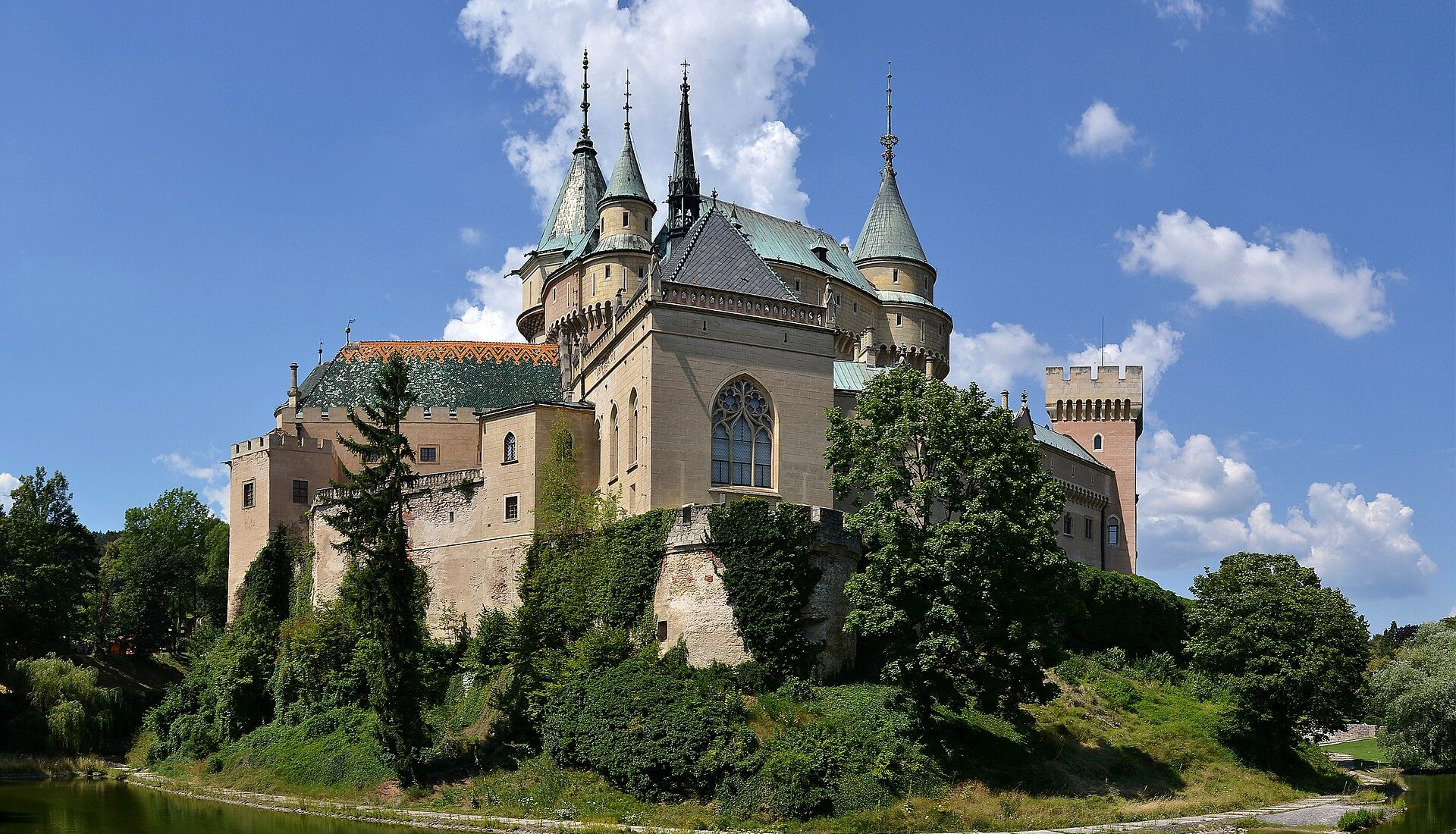
The travertine outcrop above Bojnice was fortified long before the first written record of 1113. Through the 13th century the wooden fort was rebuilt in stone by the Poznan family, and in the 14th century it passed through the hands of Matthew Csák, the great lord of western Slovakia, and then King Louis I of Hungary.
A timeline
Key moments on the castle rock
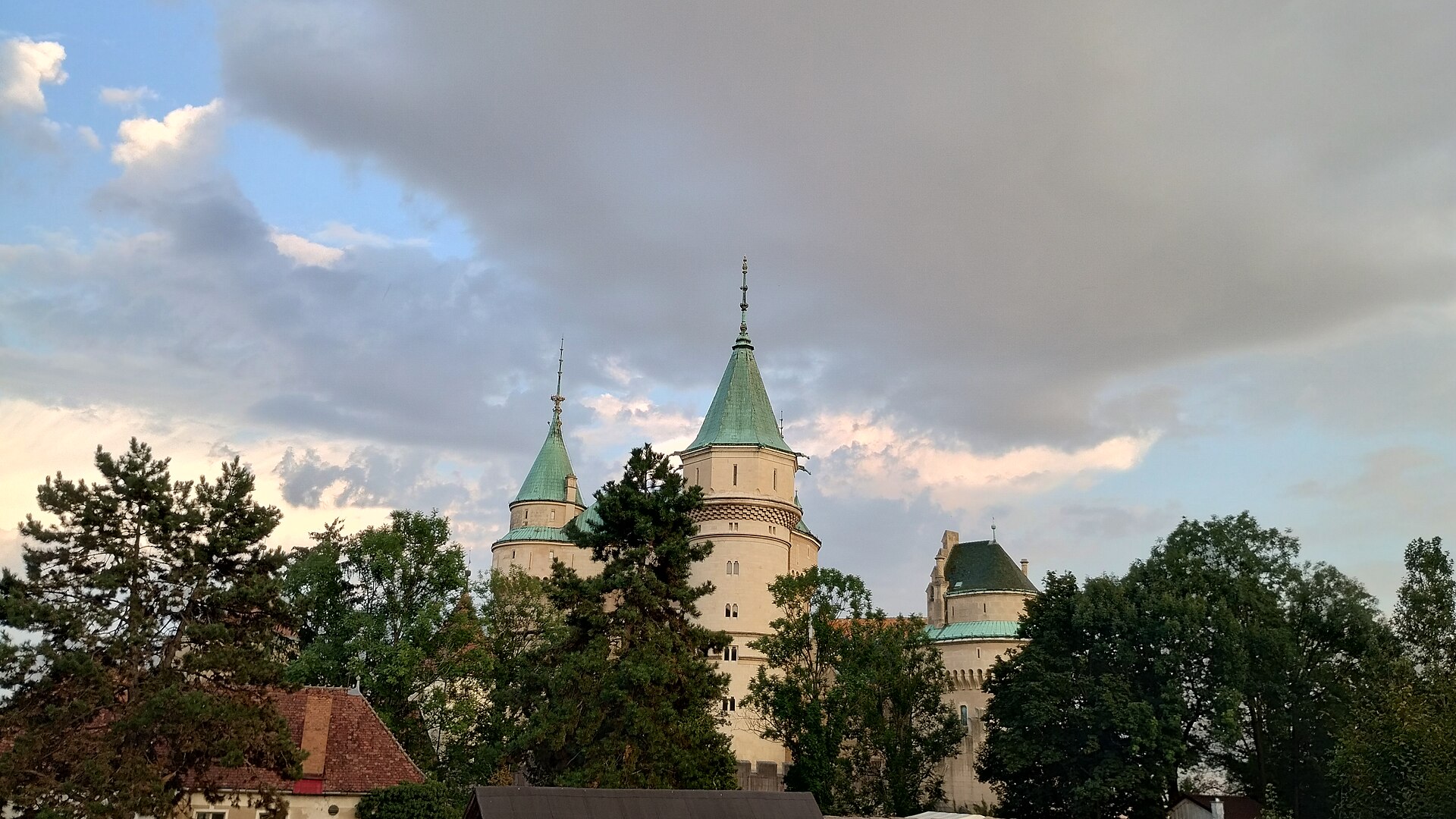
1113 — first written mention. 1302 — held by Matthew Csák. 1527 — the Thurzó family begins the Renaissance rebuild. 1646 — the Pálfi family takes over for nearly three centuries. 1889–1910 — Ján Pálfi's romantic reconstruction. 1950 — opened as a museum.
Thurzó and Pálfi
From fortress to residence
The Thurzós turned the medieval castle into a Renaissance residence; the Pálfis, who held Bojnice from 1646, made it a family seat. The last of them, Ján Pálfi, was an art collector who rebuilt the whole complex in the manner of French châteaux and filled it with tapestries, furniture and paintings — many of which are still exactly where he left them.
Pálfi's will asked for the castle to stay open to everyone, with the art left in its rooms. More than a century on, that is still how you see it.
The building
A Loire château in the Slovak hills
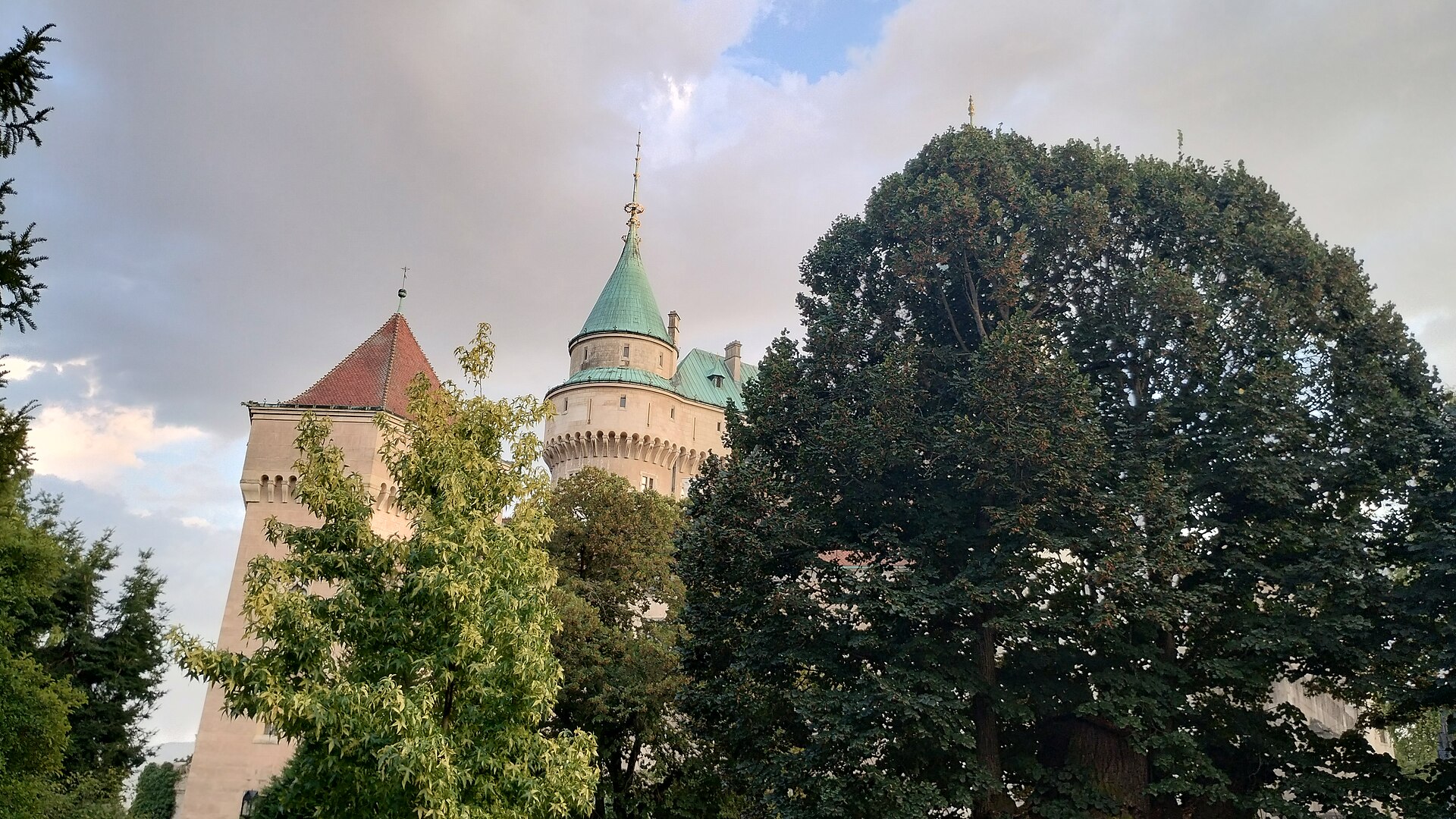
Unlike most Slovak castles, Bojnice was not built for defence in its final form. The pointed turrets, the steep slate roofs and the pale stone are deliberately French — a 19th-century vision of what a medieval castle ought to look like. Underneath, the older Gothic and Renaissance walls survive in the Middle Castle.
Layers of style
Gothic bones, Renaissance body, romantic face
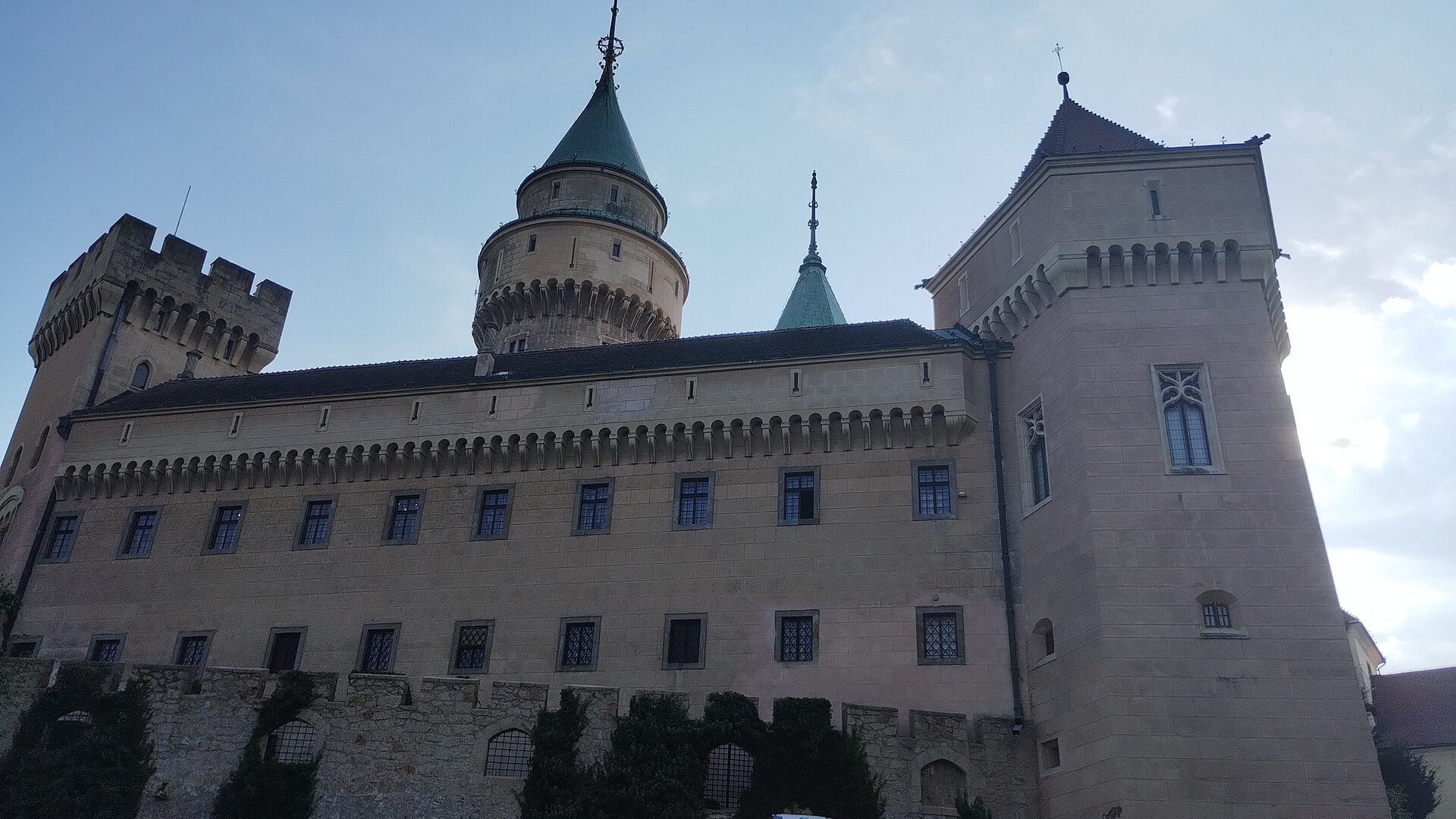
Every family that held the rock rebuilt what the last one left. What you walk through is three castles in one.
Medieval core
The Gothic lower castle and the cellars cut into the travertine — the 13th-century stronghold.
Renaissance residence
The Thurzó rebuild of the 16th century — courtyards, arcades and the first comfortable living quarters.
Romantic rebuild
Pálfi's 1889–1910 reconstruction — the turrets, the Golden Hall, the chapel and the park.
Inside the castle
What you actually see with your ticket
The Castle and cave tour covers the Count's apartment with the Golden Hall, the Huňady Hall with its Baroque chandelier, three floors of the Middle Castle with their neo-Gothic interiors, the chapel, the tomb of Ján Pálfi and the natural travertine cave. Expect a lot of stairs.